
- April 2, 2026
- Categories: Childhood Common Illnesses
- Tags: , child fever 102, fever, fever at night, fever with no other symptoms, high fever, preschooler fever, viral fever
Table of Contents
ToggleFever with No Symptoms
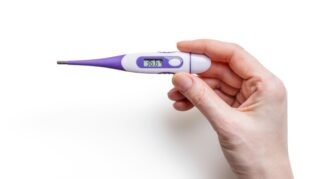
When your child feels warm to the touch but is eating, playing, and acting normally, it’s called fever with no other symptoms. This is one of the most perplexing situations for parents in both the US and UK. Unlike a cold or stomach bug where the cause is obvious, an isolated fever leaves you guessing. Medically, a fever is defined as a rectal temperature of 100.4°F (38°C) or higher. The good news? In many cases, a fever with no symptoms is actually a sign that your child’s immune system is working correctly, fighting off a minor invader without causing other distress. However, knowing when to watch and when to worry is key.
Why Do Fevers Spike at Night?
You may notice that your child’s temperature climbs higher once the sun goes down. Why do fevers spike at night? Biologically, the human body produces less cortisol (a natural anti-inflammatory hormone) during sleep. Additionally, temperature increases are influenced by your child’s circadian rhythm. During the day, activity and fluid intake often mask a low-grade fever. At night, as the body rests, the elevated body temperature becomes more apparent. This does not mean the illness has worsened; it simply means you are noticing the fever more. Keep a thermometer nearby, but remember that a night spike alone—without other warning signs—is rarely an emergency.
Preschooler Fever No Other Symptom
Managing a preschooler fever no other symptom requires a different lens than with infants. Preschoolers (ages 2–5) have more mature immune systems but can still develop high fevers from minor viral infections. A child in this age group may run a high temperature of 102°F to 104°F without coughing, vomiting, or diarrhea. Common causes include roseola (which later produces a rash) or enteroviruses. In the UK and US, pediatricians advise focusing on hydration and comfort. If your preschooler is still keen to play with toys or watch their favorite show, that’s reassuring. Seek medical attention if the preschooler fever no other symptom lasts beyond 72 hours.
High Fever No Other Symptoms
A high fever no other symptoms can be frightening, but context matters. Fevers between 102°F and 104°F (38.9°C–40°C) are common in children and rarely cause brain damage. The term grade fever helps categorize severity: low-grade (100.4–102°F), moderate (102–104°F), and high (104°F+). When a child has high fever no other symptoms, the most likely culprits are viral infections like HHV-6 or adenovirus. Bacterial infections such as UTIs (urinary tract infections) can also present with only fever, especially in younger children. Health care providers often call this fever of unknown origin if it persists beyond 7 days. For a child’s fever 102 with no other signs, home management is usually appropriate.
Fever and No Other Symptoms
The phrase fever and no other symptoms is a clinical pattern that pediatricians see frequently. It often means the infection is localized (e.g., in the urinary tract or bloodstream) or that other signs and symptoms will appear in the next 24–48 hours. In some cases, fever and no other symptoms can be an early presentation of autoimmune disease (like juvenile idiopathic arthritis) or even medication reactions. However, for the vast majority of children, it is a self-limited viral process. Parents should monitor for subtle clues: Is the child drinking less? Are they slightly less active? These may be the only hints before overt symptoms emerge.
Only Night Time Fever
When you observe only night time fever, it can be puzzling. Only night time fever typically occurs because your child’s body temperature naturally peaks in the evening. During the day, movement, crying, and external temperatures can mask or lower the core reading. Only night time fever without daytime elevation often reassures doctors that the overall illness is mild. However, if only night time fever persists for more than five nights, consider a urine test to rule out a silent UTI. In the UK, the NICE guidelines recommend checking a child’s temperature if they feel hot to the touch at night, but not waking a sleeping child solely to medicate.
Fever at Night Time Only
Similar to the above, fever at night time only follows the same physiological pattern. The key distinction is management. If your child has fever at night time only but sleeps peacefully, you do not need to wake them for antipyretics (fever reducers). Sleep is more restorative. However, if fever at night time only is accompanied by rapid breathing or a stiff neck, that is a red flag. Febrile seizures—while terrifying—are usually brief and not harmful, but they do warrant a call to your health care provider. Document the times of fever at night time only to show your pediatrician.
Child with Fever and Fatigue No Other Symptoms
A child with fever and fatigue no other symptoms presents a slightly different picture. Fatigue means the body is working hard. When a child with fever and fatigue no other symptoms just wants to lie down, this could indicate a more significant infectious disease such as mononucleosis (though rare in young kids) or an occult infection. In contrast, a child who has a fever but is running around needs less concern. For a child with fever and fatigue no other symptoms, prioritize hydration with oral rehydration solutions. If the fatigue is severe (cannot stand or walk), seek same-day medical attention. Lethargy plus fever is a warning sign even without other symptoms.
Child’s Fever 102
A child’s fever 102 is actually in the moderate range. Many parents panic at 102°F, but most high fevers in children range from 102 to 104. A child’s fever 102 without other symptoms is typically safe for home monitoring. The exact number matters less than the child’s behavior. Higher fevers (104°F+) are more likely to cause discomfort and febrile seizures, though seizures are not directly caused by the height of the fever but rather how fast it rises. For a child’s fever 102, offer fluids, dress lightly, and use acetaminophen or ibuprofen (age-appropriate dosing) if the child is miserable. Do not alternate medications unless directed.
When to Seek Emergency Care (Warning Signs)
Even with fever with no symptoms, certain warning signs override everything else. Seek immediate medical attention if your child has:
- A stiff neck or headache
- Difficulty breathing or blue lips
- A rectal temperature of 100.4°F in an infant under 3 months (this is an emergency)
- Lethargy (cannot be woken or is floppy)
- A non-blanching rash (does not fade when pressed)
- Febrile seizures lasting more than 5 minutes
For children 3–36 months with a rectal temperature of 100.4°F for more than 3 days, a urine test is often recommended to rule out bacterial infections. In the UK, call NHS 111; in the US, call your pediatrician’s after-hours line.
How to Manage an Isolated Fever at Home
When facing fever and no other symptoms, home care is straightforward. Keep the room comfortably cool (not cold). Dress your child in one light layer. Encourage small, frequent feeds of breastmilk, formula, or water (for older kids). Avoid cold baths—they cause shivering, which raises core temperature. Use fever medication only for comfort, not to normalize the number. Remember that a high temperature is a healing mechanism; it helps white blood cells fight viral infections and bacterial infections.
Final Thoughts from Pediatric Guidelines
Globally, the mantra is consistent: treat the child, not the thermometer. A fever with no symptoms is rarely dangerous in an otherwise healthy child over 3 months. However, trust your instinct. If you feel something is “off,” even without a stiff neck or rash, seek advice. Document the pattern—especially only night time fever or a child with fever and fatigue no other symptoms—because that information is gold for your doctor. Keep your health care provider’s number handy, and remember that most high fevers break on their own within 72 hours. You’ve got this.