


The journey of parenthood is filled with wonder, but it can also bring questions, especially when you notice your baby developing differently from others. If you’re searching for answers about autistic newborn signs, you’ve come to the right place. This guide from our autism center is designed to provide clarity and urgent advice for parents observing unique behaviors in their infants. Recognizing early signs of autism (autistic newborn signs) is crucial for accessing extra support. It’s important to remember that every child is unique, and early observation is a proactive step, not a diagnosis. Always consult a pediatrician or neuro-developmental pediatrician. This article will explore key indicators, from differences in eye contact and response to social situations, to help you understand your child’s development.
Key Autistic Child Signs in Infancy
The earliest signs of autism are often subtle differences in social communication and self-regulation. Rather than a checklist, think of them as a pattern of behaviors. A common question we hear is, “My baby doesn’t mimic my smiles. Is that an autistic newborn sign?” It can be, especially when combined with other factors. Key areas to observe include:
- Social Engagement: Limited back-and-forth sharing of sounds, smiles, or other facial expressions by 9 months.
- Eye Contact: Difficulty with making or sustaining eye contact during feeding or play.
- Response to Name: Not turning to look when their name is called repeatedly by 12 months.
- Gestures: Delayed or absent use of gestures like pointing, showing, reaching, or waving.

4 Signs of Autism in Newborns (0–3 Months) Not to Ignore
Some possible early signs of autism in very young infants may include:
- Difficulty or lack of tracking moving objects with their eyes
- Being overly sensitive to loud or unexpected sounds
- Minimal or absent facial expressions
- Trouble recognizing familiar or new faces
Autism Signs in Infants (4–7 Months)
For babies between four and seven months, potential red flags can include:
- Little or no response to sounds, such as not turning toward the source of a noise
- Seeming indifferent to affection or interaction
- Limited babbling or vocal play
- Rarely laughing or making joyful sounds like squeals
- Not reaching for, grasping, or holding objects
- Showing few facial expressions or emotional responses (for example, rarely smiling spontaneously)
Autism Indicators in Older Infants (8–12 Months)
Between eight and twelve months of age, some signs that may warrant attention include:
- Not crawling or delayed mobility
- Avoiding or making minimal eye contact
- Limited, unclear, or absent speech sounds
- Not using gestures such as waving, pointing, or shaking the head
- Failing to point toward objects or pictures to share interest
- Difficulty balancing or standing, even with support
Does a High Needs Baby Mean Autism? Understanding the Difference
Many parents of infants who are fussy, difficult to soothe, or have intense reactions wonder, “Does high needs baby mean autism?” This is a critical distinction. A “high needs” temperament refers to the intensity of a baby’s reactions and their need for constant comfort. However, this does not necessarily mean they are on the autism spectrum disorder.
The difference often lies in the social element. A high-needs baby may cry intensely but will still seek comfort from a parent and respond to soothing. They will typically enjoy cuddles (even if they are hard to calm). An autistic infant, on the other hand, might be overwhelmed by sensory input (leading to crying) but may not seek parental comfort in typical ways. They might arch away from cuddles or find a specific sound or movement more calming than a parent’s touch. If your high-needs baby also shows a consistent lack of engagement in social situations with you, it may be time to seek guidance from a neurodevelopmental pediatrician.
Beyond the Puzzle Piece: Understanding the Autism Color Wheel
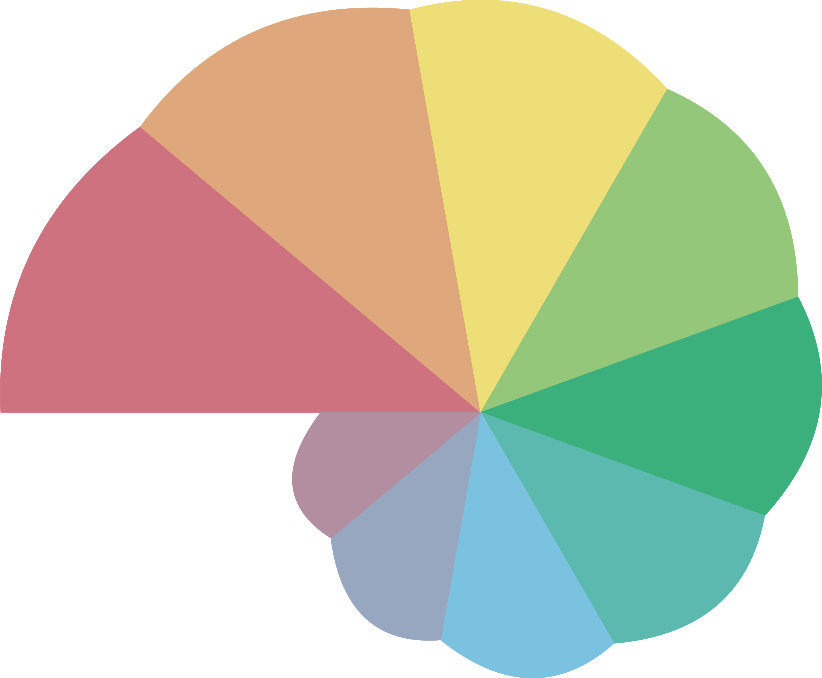
You may have seen the rainbow puzzle piece, but have you heard of the autism color wheel? This modern symbol represents the vast spectrum of experiences within the autistic community. Unlike a linear scale, a wheel shows that every individual has a unique combination of strengths and challenges across different areas like communication, sensory sensitivity, and interests. This concept helps explain why one autistic child may be non-speaking while another may speak fluently but struggle with understanding social cues. Understanding the autism spectrum disorder through this lens encourages us to see the whole child, not just a label.
Signs Your Toddler Is Not Autistic but May Have Other Delays
It’s equally important to understand what is typical development. Looking for signs your toddler is not autistic can provide reassurance. Typically developing toddlers will:
- Show a clear interest in other children, even if they don’t know how to play with them yet.
- Use gestures, sounds, and eventually words to get your attention or ask for help.
- Engage in simple pretend play, like feeding a doll.
- Try to look at what you are looking at (joint attention).
If your toddler is meeting these social milestones but has delays in other areas, such as speech, it might point to a specific language delay rather than autism. This is a crucial distinction that a doctor or therapist can help make.
Navigating the Challenges: Screaming Toddler and Autism
A screaming and anxious toddler with autism can be a challenging combination. For autistic children, screaming is often a form of communication driven by sensory overwhelm, frustration from an inability to express needs, or difficulty with transitions. It’s not a tantrum for attention but a reaction to a world that can feel too loud, bright, or unpredictable. Understanding the “why” behind the behavior is the first step toward providing the extra support they need, such as creating calm spaces or using visual schedules.
Autism in a 4-Year-Old: Signs and Support Strategies
Although autism can be diagnosed at 3 years of age but for a child public and social interactions may increase dramatically at the age of 4. Therefore, recognizing autism in a 4-year-old is still highly valuable. At this age, signs become more apparent in group settings. You might notice:
- Difficulty engaging in cooperative play with peers.
- A strong preference for routines and extreme distress over small changes.
- Highly focused or unusual interests.
- Repetitive language (echolalia) or unusual speech patterns.
A diagnosis at this age opens doors to targeted therapies and school-based support, making a significant positive impact.

Why Is My Autistic Child Always Hungry? Exploring Common Queries
A question like, “Why is my autistic child always hungry?” touches on common sensory and routine-based traits. Some children on the spectrum have a decreased sensitivity to feeling full (interoception). For others, certain foods provide strong sensory feedback they crave, or eating can be a comforting, predictable routine. Working with a feeding therapist can help address these patterns.
Autism Meaning in Urdu and Cultural Awareness
Providing resources in multiple languages is vital for inclusivity. Understanding the autism meaning in Urdu (اٹزم) helps bridge information gaps for Urdu-speaking families, ensuring they can access crucial support and reduce stigma within their communities.
The Key Difference Between ADHD and Autism
Understanding the difference between ADHD and autism is essential as they can co-occur or be confused. While both may involve hyperactivity and attention difficulties, autism is primarily characterized by challenges with social communication, restricted interests, and repetitive behaviors. ADHD’s core features are related to attention regulation, impulse control, and activity level. A thorough evaluation is needed to tell them apart.
Speech Delay vs Autism: Untangling the Overlap
A speech delay vs autism comparison is a common concern. A pure speech delay might be because of many reasons. It means a child’s social skills, play, and non-verbal communication (like pointing and gesturing) are age-appropriate; they just aren’t using words. In autism, the language delay is part of a broader social communication delay. The child may not use gestures, have limited eye contact, and not engage in back-and-forth interaction.
Conclusion: Your Path Forward with Confidence
Noticing potential autistic newborn signs can be unsettling, but knowledge is power. Understanding these early signals empowers you to advocate for your child. Whether your child is on the autism spectrum disorder or has a different developmental path, your observant care is the first and most important step. Don’t hesitate to seek urgent advice from a health professional. With early intervention and the right extra support, you can help your child thrive.
